You’veheard the stories. Prices skyrocketing by thousands of percent. Tales of overnight millionaires. A constant media frenzy and a pervasive feeling of "fear of missing out" (FOMO). These are the hallmarks of a Bubble in Cryptocurrency, a phenomenon that has been a dramatic and defining feature of the cryptocurrency landscape.
But what exactly is a crypto bubble? Is it just a period of high prices, or is there more to it?
Key Takeaways
- A crypto bubble is a market cycle where asset prices rapidly rise far beyond their fundamental value, driven by speculation, and are followed by a sharp crash.
- Major signs of a bubble include extreme media hype, widespread FOMO, and prices becoming detached from any real-world utility.
- While it's possible to profit from a bubble, it is extremely risky as timing the market peak is nearly impossible for most investors.
- Protecting yourself involves thorough research (DYOR), having a clear exit strategy, and never investing more than you can afford to lose.
This guide will break down the economic concept of a market bubble, explore crypto's most famous boom-and-bust cycles, and answer the critical question: can you actually profit from one?
How Cryptocurrency Bubbles Form
A cryptocurrency bubble is an economic cycle characterized by a rapid, exponential increase in the price of digital assets that far exceeds their fundamental value. This surge is driven heavily by speculation and hype rather than tangible utility or adoption. Inevitably, this "mania" phase is followed by a sharp, devastating price collapse, often called a "crash" or "burst," where prices plummet and many investors face significant losses.
While bubbles happen in all financial markets (like the Dot-com bubble of the late 90s), they are particularly pronounced in crypto due to its high volatility, global 24/7 nature, and the powerful influence of social media.
A History of Major Crypto Bubbles
To understand the pattern, it helps to look at the past. The crypto market has already experienced several major boom-and-bust cycles:
- The 2013-2014 Bubble: Driven by early Bitcoin adoption and the infamous Mt. Gox exchange, prices surged to over $1,000 before crashing by more than 80%.
- The 2017-2018 ICO Bubble: The "Initial Coin Offering" craze led to a massive bull run where Bitcoin nearly hit $20,000 and countless altcoins were created. This was followed by a brutal, year-long "crypto winter."
- The 2021 Bull Run: Fueled by institutional interest, DeFi, and NFTs, Bitcoin soared to over $68,000. This peak was followed by a significant market downturn throughout 2022.
What Are the Signs of a Crypto Bubble?
While no one can predict the future with certainty, bubbles often share common warning signs. Recognizing them is key to making informed decisions.
- Extreme Media Hype: When cryptocurrency news moves from niche financial outlets to mainstream headlines and dinner table conversations, it's a sign of peak attention.
- "This Time It's Different" Narrative: People begin to justify the astronomical prices with claims that old valuation metrics no longer apply due to new technology.
- Widespread FOMO: Investors buy assets not because they've researched them, but because they are terrified of missing out on the rapid gains their friends are talking about.
- Decoupling from Fundamentals: Prices become detached from any underlying value or utility, moving up solely because of speculative demand.
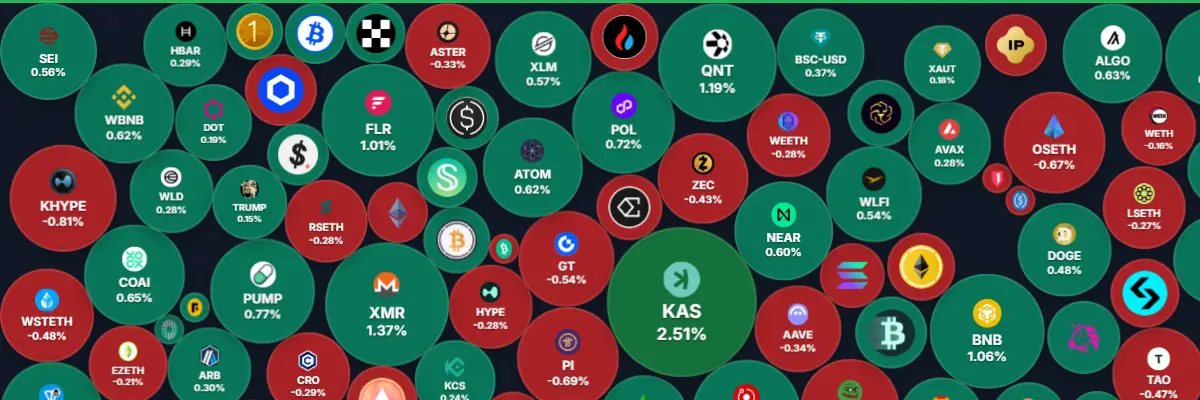
- Extreme Positive Sentiment: The market becomes overwhelmingly bullish, and any skepticism is dismissed. One of the best ways to gauge this is to observe the overall market mood. You can see this sentiment instantly by using a crypto bubble chart, which visualizes the daily performance and volatility of the entire market at a single glance.
Can You Profit From a Crypto Bubble?
This is the most common question, and the answer is a very careful "yes, but it's extremely risky."
The Opportunity: Significant, life-changing profits are indeed made during the euphoric "mania" phase of a bubble. Investors who get in early and have a clear exit strategy to take profits can do very well.
The Extreme Risk: For every success story, there are countless others who lose everything. Here’s why:
- Timing the Top is Impossible: No one knows when the peak will be. Most people are overcome by greed and hold on for too long, only to watch their profits evaporate in the crash.
- Emotion Takes Over: The psychology of a bubble is powerful. It’s incredibly difficult to sell when it feels like the prices will go up forever.
- Most People Buy Late: The vast majority of investors only hear about the bubble during the mania phase, meaning they buy in at dangerously high prices, right before the crash.
How to Protect Yourself When a Bubble Bursts
Navigating a volatile market requires a strategy focused on survival, not just profits.
- Do Your Own Research (DYOR): Invest in projects with real utility and strong fundamentals, not just hype.
- Have an Exit Strategy: Decide on your profit targets before you invest and stick to them.
- Don't Invest More Than You can Afford to Lose: This is the golden rule. Never invest money you would need for living expenses.
- Avoid Leverage: Trading with borrowed money during a bubble is a recipe for financial disaster.
Conclusion: Navigating Crypto's Boom and Bust Cycles
Market bubbles are not just a part of crypto; they are a natural feature of any new and groundbreaking technology. They are fueled by human emotion and market psychology. By understanding what a bubble is, recognizing its signs, and respecting its inherent risks, you can move from being a purely emotional participant to a more strategic and informed observer of the market.
Disclaimer: This is not financial advice. Attempting to trade during a market bubble is one of the highest-risk activities in investing. Never invest more than you are willing to lose.